
Heel Pain Specialist in Belfast
Heel pain is one of the most common problems we treat at the Lower Limb Clinic. It has several different causes that can feel similar but need very different treatment, so the first job is always an accurate diagnosis.
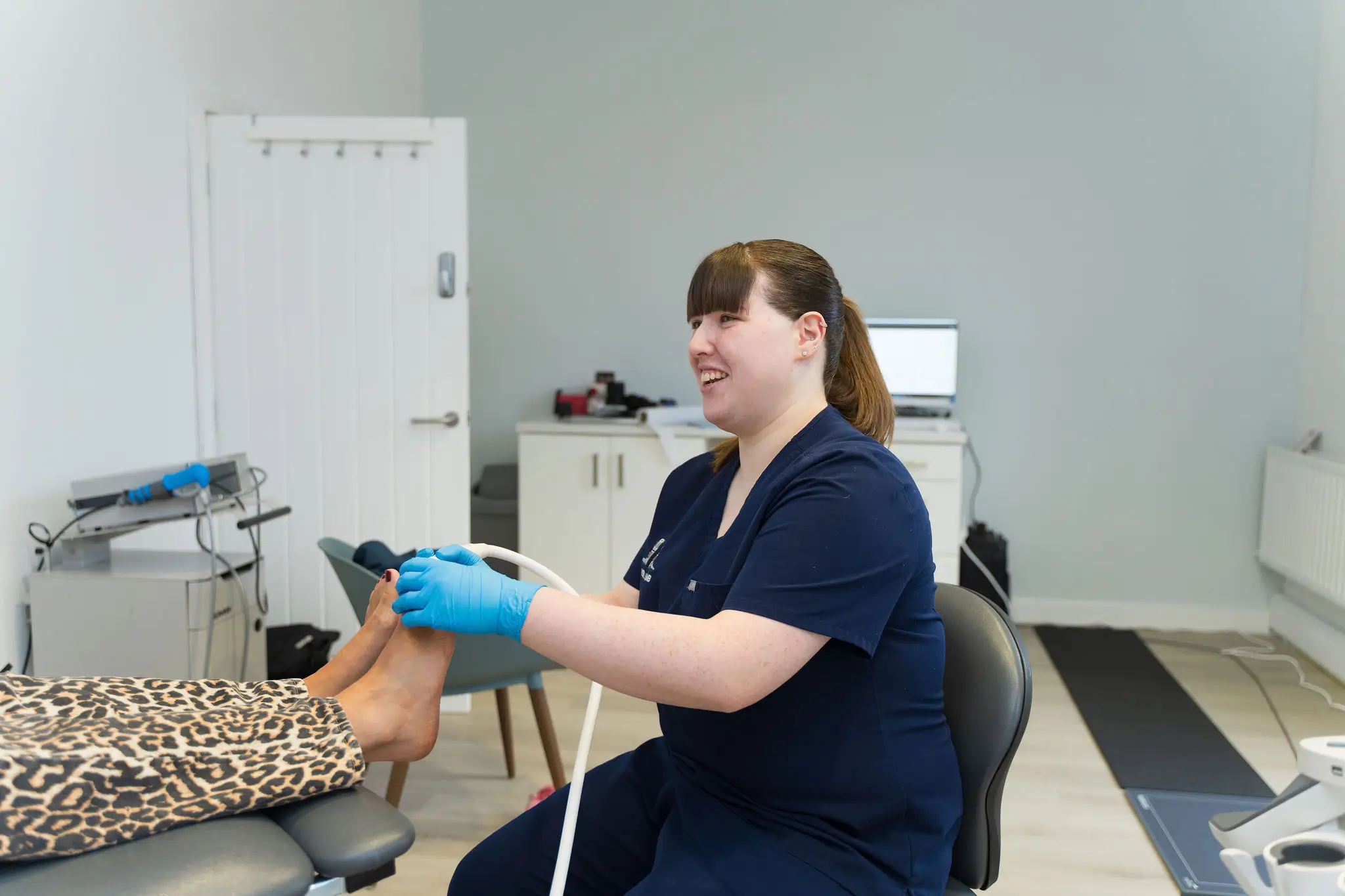
Using in-house diagnostic ultrasound, video gait analysis and pressure plate technology, we identify exactly which structure is causing your pain rather than guessing. That means treatment is targeted from day one and you spend less time sore.
Types of Heel Pain
Plantar fasciitis
By far the most common cause of pain under the heel. The plantar fascia, a thick band of tissue along the sole, becomes irritated where it attaches to the heel bone. The hallmark is sharp first-step pain in the morning that eases as you move.
Learn moreHeel spur / calcaneal spur
A small bony growth on the underside of the heel bone, usually seen by chance on an X-ray. The spur itself is rarely the cause of pain. The discomfort comes from the soft tissue around it, which is why treatment targets the fascia and loading rather than the spur.
Learn moreFat pad atrophy
The natural cushion under the heel thins with age, high-impact activity or repeated steroid injections, leaving a deep, bruise-like ache right in the centre of the heel. Cushioned support and offloading with custom orthotics protect the area while it recovers.
Learn moreBaxter's nerve entrapment
A trapped nerve on the inside of the heel that can mimic plantar fasciitis but often brings burning or tingling. It is frequently missed, which is why we use diagnostic ultrasound to confirm it before treating.
Learn moreInsertional Achilles pain
Pain at the back of the heel, where the Achilles tendon meets the bone, rather than underneath it. It is often stiff first thing and sore after exercise, and needs a different loading programme to pain under the heel.
Learn moreHeel Spurs and Calcaneal Spurs
Worried about a heel spur showing on an X-ray? In most cases the spur is not the problem, and the pain settles without surgery once the soft tissue and loading are treated.
A heel spur, or calcaneal spur, is a small calcium deposit that forms on the heel bone. Plenty of people have one and never know, because spurs are common and usually painless. When heel pain does occur alongside a spur, the pain almost always comes from the surrounding soft tissue, most often the plantar fascia.
That is why we do not chase the spur. We assess the fascia, the fat pad and your foot mechanics, then use treatments such as shockwave therapy and custom orthotics to settle the painful tissue and offload the heel. See our dedicated heel spurs page for more detail.
Heel Pain After Running
Heel pain that comes on with running, or that is worse the day after a run, usually points to plantar fasciitis or an insertional Achilles problem driven by training load and foot mechanics. A sudden jump in mileage, new shoes or a change of surface are common triggers.
We use video gait analysis to see how you load the heel when you run, then build a plan that keeps you training where possible while the tissue recovers. If you are dealing with this, our guide on heel pain after running walks through the likely causes and next steps.
How We Treat Heel Pain
Accurate Diagnosis
Biomechanical Assessment
Targeted Treatment
Return to Activity
Frequently Asked Questions
Common questions about Heel Pain at Lower Limb Clinic.

Clinically reviewed by Paul McMullan, BSc(Hons) MSc FRCPSGlasg MRCPod
BSc (Hons) Podiatry · MSc Podiatric Sports Medicine (QMUL) · FRCPSGlasg · MRCPod
Lead Podiatrist & Clinical Director, Lower Limb Clinic Belfast