





What is Achilles Tendinopathy?
Achilles tendinopathy is a painful, degenerative condition of the Achilles tendon, the largest and strongest tendon in the body, connecting your calf muscles (gastrocnemius and soleus) to your heel bone (calcaneus). It is one of the most common overuse injuries we treat at Lower Limb Clinic, affecting runners, recreational athletes, and non-athletic individuals alike.
The term "tendinopathy" has largely replaced "tendinitis" in modern clinical practice, and the distinction matters. Research over the past two decades has shown that Achilles tendon pain is rarely caused by acute inflammation. Instead, it represents a failed healing response within the tendon, a process of disorganised collagen repair, increased ground substance, and in many cases, the ingrowth of new blood vessels (neovascularisation) into areas of the tendon that are normally avascular.
Achilles tendinopathy is classified into two distinct types based on where the pathology occurs, and the distinction is clinically important because they behave differently and require different treatment approaches.
Mid-portion tendinopathy affects the body of the tendon, typically 2–6cm above its insertion into the heel bone. This is the most common type, particularly in runners and active individuals. The tendon becomes thickened, painful, and structurally disorganised at the point of maximum mechanical load.
Insertional tendinopathy affects the lower portion of the tendon where it attaches to the calcaneus. It is often associated with Haglund's deformity (a bony prominence on the back of the heel), retrocalcaneal bursitis, and calcification within the tendon insertion. Insertional tendinopathy is more common in less active individuals and can be more challenging to treat.
Both types can affect the same patient, and both require accurate imaging to determine the extent of pathology and guide treatment.
Classic Symptoms
- Pain and stiffness in the Achilles tendon, worst first thing in the morning or after periods of rest
- A 'warm-up' effect, pain that eases after a few minutes of walking but returns after prolonged activity
- Pain during or after exercise, particularly running, hill walking, or stair climbing
- Visible or palpable thickening of the tendon compared to the other side
- Tenderness when squeezing the tendon between thumb and finger
- Stiffness or reduced ankle dorsiflexion (ability to pull the foot upward)
Signs You Need Specialist Assessment
- Pain that has persisted for more than 2–3 weeks despite rest or reduced activity
- Pain that is worsening or affecting your ability to walk normally
- Morning stiffness that takes more than 10–15 minutes to ease
- A sudden increase in pain, a popping sensation, or difficulty pushing off. These may indicate a partial tear
- Previous treatment (stretching, ice, rest, anti-inflammatories) hasn't resolved the problem
- You've been told to 'rest it' but the pain returns every time you increase activity
Why Accurate Diagnosis Matters
Achilles tendinopathy is not a single condition. It exists on a continuum of pathology, from early reactive changes through to advanced degeneration. Where your tendon sits on this continuum fundamentally changes how it should be treated.
A reactive tendon (early stage) that has become irritated by a sudden increase in load requires load modification and careful management. A degenerative tendon (late stage) with structural breakdown, neovascularisation, and loss of normal collagen architecture requires a progressive loading programme designed to stimulate tendon remodelling. Treating a degenerative tendon like a reactive one, with rest and anti-inflammatories, is ineffective. Treating a reactive tendon like a degenerative one, with aggressive loading, risks making it worse.
Clinical examination alone cannot reliably distinguish between these stages. This is why we use diagnostic ultrasound in every Achilles tendinopathy assessment.
Conditions that can mimic Achilles tendinopathy:
- Retrocalcaneal bursitis: Inflammation of the bursa between the Achilles tendon and the heel bone. Causes pain very similar to insertional tendinopathy. On ultrasound, the distended bursa is clearly visible.
- Paratenon pathology: The Achilles paratenon can become inflamed or thickened, causing pain that mimics tendinopathy. Ultrasound differentiates paratenon involvement from intratendinous pathology.
- Partial Achilles tendon tear: A partial tear within a degenerative tendon requires different management. Without imaging, partial tears can be missed and inappropriate loading may risk progression to a complete rupture.
- Haglund's deformity: A bony enlargement on the back of the calcaneus that causes mechanical irritation of the tendon and bursa. Identifying this on imaging changes the treatment approach.
- Plantaris tendon involvement: The small plantaris tendon runs alongside the Achilles and can become entrapped or irritated, contributing to medial-sided Achilles pain. Frequently overlooked without ultrasound.
How We Diagnose Achilles Tendinopathy
Diagnostic Ultrasound Scanning
Ultrasound is recognised as the first-line imaging modality for Achilles tendon assessment. The Dutch Multidisciplinary Guideline on Achilles Tendinopathy recommends ultrasound as the primary imaging tool. At Lower Limb Clinic, every Achilles pain assessment includes diagnostic musculoskeletal ultrasound.
- Tendon thickness: A normal Achilles measures approximately 5–6mm. In tendinopathy, this increases. A cutoff of 10mm or greater confirms significant pathology. We measure precisely and compare to the unaffected side.
- Tendon structure (echogenicity): A healthy tendon has tightly organised parallel collagen bundles. In tendinopathy, we see hypoechoic areas representing disorganised collagen and structural breakdown.
- Neovascularisation (Power Doppler): New blood vessels growing into damaged areas bring small nerve fibres strongly associated with pain. Research shows the site of maximum neovascularisation correlates with maximum pain.
- Staging the pathology: Using the Cook and Purdam continuum model, ultrasound findings allow us to stage as reactive/early dysrepair or late dysrepair/degenerative, with direct treatment implications.
- Identifying partial tears: Areas of fibre disruption, interstitial tears, and partial-thickness tears change rehabilitation timeline and loading parameters.
- Associated structures: We evaluate the retrocalcaneal bursa, paratenon, calcaneal insertion, and plantaris tendon to ensure nothing is missed.
- Dynamic assessment: Unlike MRI, ultrasound allows us to assess the tendon during movement in real time, identifying areas of restriction or adhesion.
- Treatment monitoring: Repeat ultrasound objectively tracks response. If tendon thickness, echogenicity, and neovascularisation aren't improving, we adjust the programme.
Pressure Plate Gait Analysis
Achilles tendon loading is directly influenced by how your foot functions during walking and running. Pressure plate analysis provides objective data on the mechanical factors contributing to your tendinopathy.
- Rearfoot loading patterns: Excessive heel loading during contact phase increases eccentric demands on the Achilles tendon.
- Propulsion mechanics: The push-off phase is where the Achilles is loaded most heavily. We assess efficiency and symmetry.
- Pronation timing and magnitude: Excessive or late-phase pronation causes a "wringing" effect concentrating load on the medial tendon, a common finding in mid-portion tendinopathy.
- Asymmetry: Comparing both feet identifies loading differences that explain why one side is affected.
Clinical Biomechanical Assessment
Comprehensive hands-on examination including assessment of ankle dorsiflexion range (one of the strongest risk factors for Achilles tendinopathy), calf muscle strength testing using single-leg heel raise endurance and maximum height, assessment of gastrocnemius and soleus individually, lower limb kinetic chain assessment including hip and knee control, and running gait analysis where relevant.
Treatment Options
Progressive Loading Rehabilitation
Shockwave Therapy (ESWT)
Custom 3D-Printed Orthotics
Ultrasound-Guided Injection
Footwear & Load Management
Common Causes & Risk Factors
Training Errors
Calf Weakness & Reduced Dorsiflexion
Biomechanical Factors
Age, Footwear & Systemic Factors
What to Expect at Your First Appointment
Your story
5 minClinical examination
5–10 minDiagnostic ultrasound
10 minPressure plate analysis
5 minDiagnosis & treatment plan
5 minRecovery & Prognosis
Achilles tendinopathy responds well to appropriate treatment, but it requires patience and consistency. Mild to moderate cases typically show meaningful improvement within 6–12 weeks of a structured loading programme. More chronic or severe cases, particularly those with significant structural degeneration on ultrasound, may take 3–6 months to achieve full recovery.
Approximately 70–80% of patients with Achilles tendinopathy recover fully with conservative treatment. The key to successful recovery is accurate staging through ultrasound, a loading programme matched to your tendon's capacity, and consistent adherence to the rehabilitation protocol. We monitor your progress with regular clinical review and repeat ultrasound, ensuring the programme is adjusted based on how your tendon is actually responding, not just how it feels.
Your Clinicians
Paul McMullan BSc(Hons) MSc FRCPSGlasg MRCPod leads the specialist tendon service. Paul holds a Master's degree in Podiatric Sports Medicine from Queen Mary University of London and is a Fellow of the Royal College of Physicians and Surgeons of Glasgow. With over 15 years of clinical experience managing tendinopathy in runners and athletes, Paul combines diagnostic ultrasound expertise with evidence-based loading rehabilitation and advanced injection techniques.
Darren Costello BSc(Hons) MSc PGCert MRCPSGlasg HCPC MRCPod specialises in sports podiatry, biomechanics, and ultrasound imaging. Darren holds an MSc in Sports and Exercise Medicine from Ulster University and a Postgraduate Certificate in Lower Limb MSK Ultrasonography from Brunel University London. His Master's research investigated the impact of taping interventions on gait and plantar fascia structure, reflecting his evidence-based approach to lower limb rehabilitation. Darren provides Achilles tendinopathy assessment, ultrasound-guided staging, and structured loading programmes at our Lisburn Road and Ormeau Road clinics.
Having two MSc-qualified clinicians with diagnostic ultrasound training means shorter waiting times for specialist assessment, collaborative case discussion for complex presentations, and continuity of care throughout your rehabilitation programme.
Why Patients Choose Lower Limb Clinic
Diagnostic ultrasound in every Achilles assessment
Evidence-based loading programmes
Shockwave therapy
Ultrasound-guided injection therapy
In-house orthotic manufacturing
700+ five-star Google reviews
Frequently Asked Questions
Common questions about Achilles Tendinopathy at Lower Limb Clinic.
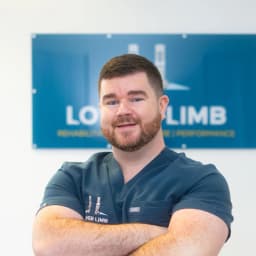
Clinically reviewed by Paul McMullan, BSc(Hons) MSc FRCPSGlasg MRCPod
BSc (Hons) Podiatry · MSc Podiatric Sports Medicine (QMUL) · FRCPSGlasg · MRCPod
Lead Podiatrist & Clinical Director, Lower Limb Clinic Belfast