Specialist rehab for shoulder, elbow, wrist and neck problems — backed by in-house diagnostic ultrasound.
Rotator cuff rehab, frozen shoulder, tennis and golfer's elbow, post-surgical rehab. Launching August 2026 at both Belfast clinics.
Lower Limb Clinic is, first and foremost, a specialist podiatry and lower limb sports medicine practice. That won't change. What's new from August 2026 is that our physiotherapy team will also treat upper limb problems — because the same principles of careful assessment, evidence-based loading and progressive rehab apply just as well to a rotator cuff or a tennis elbow as they do to an Achilles tendon.
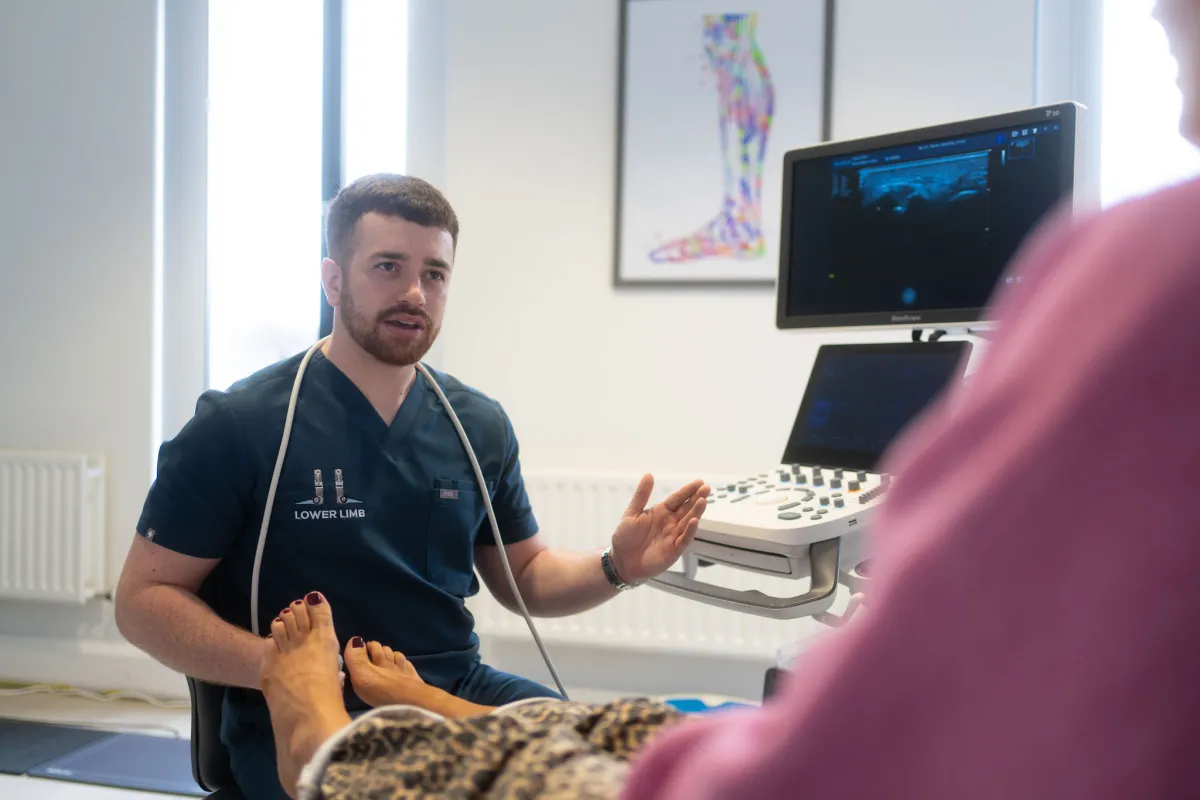
What you get here that you won't get at a generalist physio: diagnostic ultrasound in the same building, clinicians trained in ultrasound-guided injection, and a shockwave therapy service — so when your rehab needs more than exercise alone, everything you need is under one roof.
Whether you're dealing with a nagging shoulder, a stubborn tennis elbow or a frozen shoulder that isn't getting anywhere, we'll build a rehab plan that moves.

Shoulder rehab hinges on rotator cuff strength. We measure it objectively with VALD muscle dynamometry — internal rotation, external rotation, abduction, grip strength and elbow flexion, all recorded in Newtons and tracked session by session.
Used daily by Premiership clubs and elite sports medicine departments. At Lower Limb Clinic you get the same testing standard applied to your shoulder, elbow or post-surgical rehab. Return-to-activity calls become data-driven, not guesswork.
Learn more about our VALD testingSix specialist focus areas for the upper limb, plus ultrasound-guided capability you won't find at most Belfast physios.
Precision strength testing of the rotator cuff, shoulder, elbow and grip using VALD muscle dynamometry — the objective testing standard used in elite sports medicine. No more 'feels 80%' — measured in Newtons, tracked session to session.
Structured rehabilitation for rotator cuff tendinopathy, subacromial pain, impingement and rotator cuff tears. Progressive loading, scapular control work, and VALD-measured cuff strength to guide return to activity.
Stage-appropriate management for adhesive capsulitis — pain control and gentle mobility in the freezing phase, through to progressive range and strengthening as symptoms settle. Often combined with targeted ultrasound-guided injection.
Evidence-based loading programmes for lateral and medial epicondylalgia — heavy slow resistance, isometric work, grip strengthening. Combined with shockwave therapy where appropriate for chronic cases.
Rehab after rotator cuff repair, shoulder stabilisation, shoulder replacement and other upper limb procedures. Coordinated around your surgeon's post-op protocol and milestones.
Assessment-led management of mechanical neck pain, headaches of cervical origin, thoracic stiffness and desk-based postural pain. Exercise prescription, manual therapy and ergonomic advice.
One of the only Belfast physiotherapy services with in-house musculoskeletal ultrasound — used to confirm tendon, bursa and joint pathology, and to guide injection therapy where it adds value.
From nagging shoulder pain you've put up with for months to post-surgical rehab that needs careful progression — here's a snapshot of the conditions our upper limb physiotherapy service will cover from August 2026.
Gradual-onset shoulder pain with weakness or painful arc when lifting the arm. Common in overhead workers, swimmers, racquet-sport players and anyone with a sudden change in shoulder load. Responds well to progressive loading — not rest.
Shoulder pain with overhead movement caused by mechanical compression of the rotator cuff and subacromial bursa. Rehab targets scapular control, posture and cuff strength.
Progressive loss of shoulder range and significant pain, often without clear cause. Typically self-limiting over 1–2 years, but targeted physiotherapy — plus ultrasound-guided injection in the painful phase — shortens the timeline considerably.
Most partial tears and many small full-thickness tears respond well to non-surgical rehab. We assess, image and build a loading programme — and coordinate with surgeons when repair is warranted.
Pain on top of the shoulder, worse with cross-body movement and lying on that side. Common after a fall on the shoulder (rugby, cycling) or from wear and tear.
Anterior shoulder pain, often aggravated by lifting and pulling. Usually coexists with rotator cuff pathology — rehab addresses both.
Lateral elbow pain and grip weakness — common in desk workers, manual workers, and tennis / racquet players. Evidence-based heavy slow resistance loading is the cornerstone treatment. Shockwave therapy added for chronic cases.
Medial elbow pain with gripping and wrist flexion. Loading-based rehab with wrist-flexor strengthening and grip work. Shockwave for stubborn, long-standing cases.
Pain and swelling at the thumb-side of the wrist, common in new parents and people with high-volume phone or keyboard use. Responds to load modification, targeted exercise and splinting where needed.
Nocturnal hand tingling and numbness, often with thumb-side weakness. Physiotherapy-led management with nerve gliders, posture and ergonomic work — referring on where surgery is indicated.
Neck stiffness, restricted movement and referred headaches — commonly triggered by prolonged desk posture. Manual therapy combined with targeted strengthening and postural work.
Structured rehab after rotator cuff repair, shoulder stabilisation, subacromial decompression and total shoulder replacement — aligned to your surgeon's protocol.
Not sure if your problem fits? Describe it on the waitlist form — we'll let you know whether we're the right fit and what to expect.
Our upper limb physiotherapy service is supported by the rest of the Lower Limb Clinic pathway.
Join the upper limb physiotherapy waitlist for priority booking when the diary opens in August 2026.
Common questions about upper limb physiotherapy at Lower Limb Clinic.