
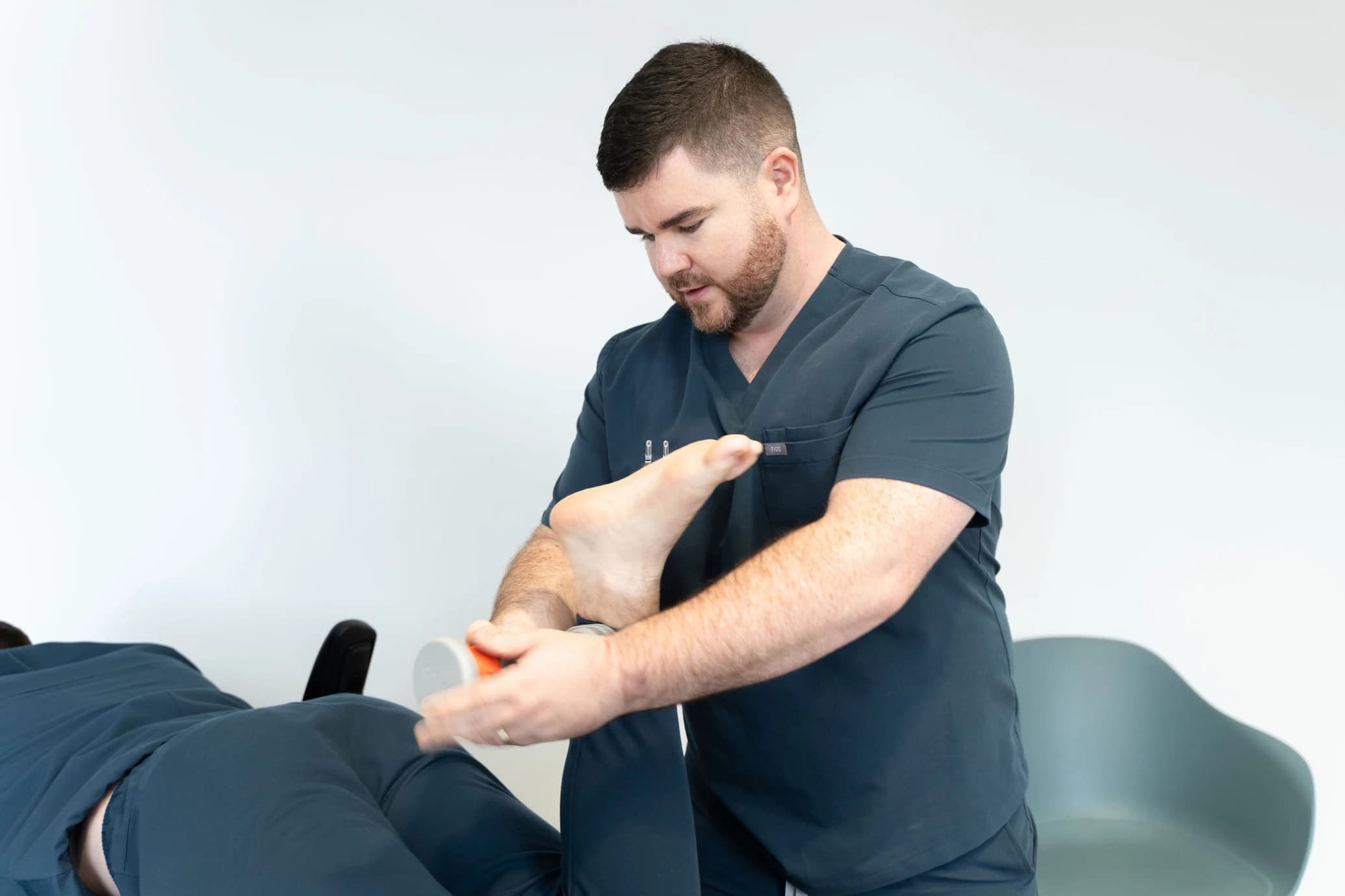





What is Frozen Shoulder?
Frozen shoulder (adhesive capsulitis) is a condition in which the capsule surrounding the shoulder joint becomes inflamed and then tightens, causing pain followed by progressive stiffness. It typically moves through three stages: a painful freezing stage, a stiff frozen stage, and a gradual thawing stage as movement returns.
It most commonly affects people between 40 and 60, and is more common in those with diabetes or thyroid conditions, or after a period of shoulder immobilisation such as surgery or injury. Because the treatment that helps most depends on the stage you are in, an accurate diagnosis matters. At Lower Limb Clinic our clinicians assess the shoulder clinically, with in-house diagnostic ultrasound available to rule out rotator cuff pathology and other causes of a stiff, painful shoulder.
Full-body physiotherapy is now available at Lower Limb Clinic in Belfast. Book online to see our physiotherapist.
Common Symptoms
- Deep, aching shoulder pain, often worse at night
- Progressive stiffness and loss of movement in all directions
- Difficulty reaching overhead, behind your back, or across your body
- Pain with sudden movements or knocks to the arm
- Trouble with everyday tasks like dressing, driving, or fastening a seatbelt
- Symptoms that have built up over weeks to months
Common Causes
- Primary (idiopathic) frozen shoulder with no clear trigger
- Diabetes and thyroid conditions, which increase risk
- Immobilisation after shoulder surgery or injury
- Rotator cuff injury leading to secondary stiffness
- Previous frozen shoulder on the other side
How We Treat Frozen Shoulder
Treatment is matched to the stage of the condition. In the painful early stage, the priority is settling pain: activity modification, gentle movement within tolerance, and advice on sleep positions. Where pain is severe, a corticosteroid injection can be effective at this stage, and we will advise and arrange the appropriate referral where indicated. As the shoulder moves into the stiff and thawing stages, treatment shifts to progressive stretching, joint mobilisation, and strengthening to restore range and function. Throughout, we monitor progress against clear milestones rather than leaving you to wait it out alone.
MSK Assessment & Staging
Pain-Stage Management
Manual Therapy & Stretching
Rehabilitation Programme
Ready to get frozen shoulder treated?
When to Seek Professional Help
- Shoulder pain and stiffness have been building for more than two weeks
- Night pain is disrupting your sleep
- You are losing movement in more than one direction
- You have diabetes or a thyroid condition and new shoulder stiffness
- Stiffness followed a shoulder injury or surgery
- You want to confirm whether this is frozen shoulder or a rotator cuff problem
Frequently Asked Questions
Common questions about Frozen Shoulder at Lower Limb Clinic.

Clinically reviewed by Rory McIntyre, BSc(Hons) MSc MCSP
BSc (Hons) Physiology & Sport Science · MSc Physiotherapy (Leeds) · MCSP · HCPC Registered
Chartered Physiotherapist, Lower Limb Clinic Belfast