If you have woken up in the last few weeks and felt a sharp, stabbing pain under your heel the moment your foot hit the bedroom floor, this guide is for you. It is the longest piece of writing we have ever published, because plantar fasciitis is the running injury we see more than any other at Lower Limb, and because most runners come to us frustrated by months of generic advice that has not worked. This is the full pathway. It is honest, evidence-based, and written specifically for the Belfast runner.
We treat plantar fasciitis every week. Sometimes it is the recreational 5k runner who started the Couch to 5k three months ago and pushed too fast. Sometimes it is the marathon-trained club runner who has been chasing a sub-3:00 and stopped paying attention to load. Sometimes it is a returning runner who took two years off and assumed they could pick up where they left off. The story is rarely about willpower. It is almost always about load, mechanics, and tissue biology not being treated together. This guide is our attempt to put all three on the same page.
A note on what this is not. This is not the place to confirm a diagnosis. If you have heel pain that wakes you up at night, calf swelling, redness, a sudden sharp pop you felt while running, or pain that does not match the pattern we describe below, please come in and let us look. Some of the things that look like plantar fasciitis at first glance are not, and they need different management.
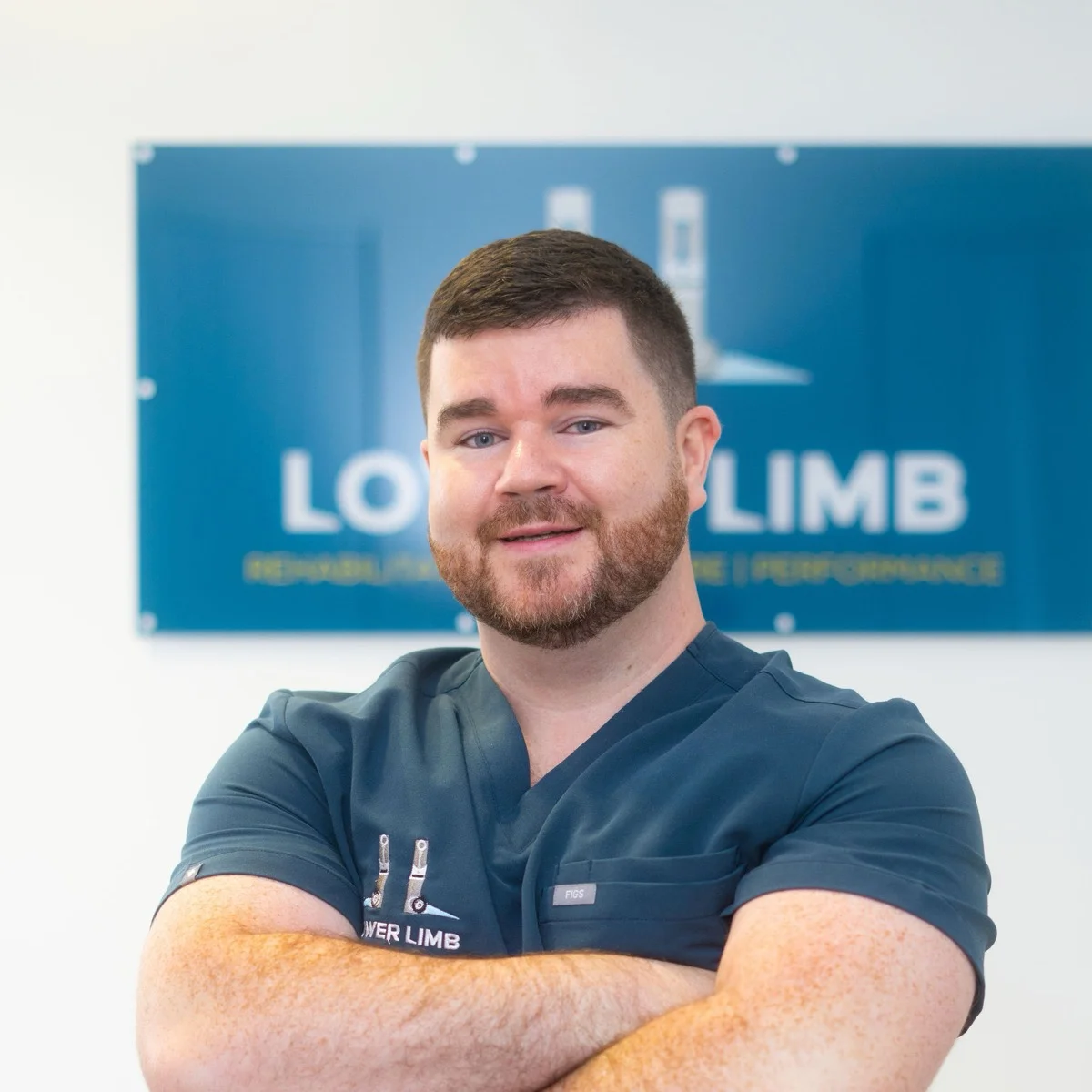


Paul founded Lower Limb Clinic in 2011 and leads the MSK pathway from our Lisburn Road headquarters. Darren runs the sports medicine clinic in Belfast and the monthly visiting clinic at Body Med, Clontarf. Chloe sees biomechanical and routine cases across our two Belfast sites.
What plantar fasciitis actually is
The plantar fascia is a strong, fibrous band of tissue that runs along the underside of your foot from the inside of your heel bone to the base of your toes. It is not a muscle and it does not stretch the way muscles do. It is more like a tendon, designed to absorb load and act as a passive spring during gait. When you push off in running, the fascia stores and returns elastic energy. When it is healthy, you do not notice it. When it is overloaded, you notice it on every first step.
The older name "plantar fasciitis" implies inflammation. Most of the modern research, including imaging studies looking at the tissue under ultrasound and MRI, now describes a degenerative tendinopathy with thickening of the fascia at its heel attachment, disorganised collagen fibres, and only mild inflammatory markers. That is why anti-inflammatories alone rarely fix it. The tissue is not just inflamed. It is structurally adapting to an overload it cannot recover from, and the treatment has to address that biology, not just the symptoms.
The classic presentation is the one most Belfast runners describe to us inside the first minute of a consultation. Sharp, sometimes searing pain under the inside front of the heel on the first few steps in the morning. It eases as you walk around the house. By the time you have made the coffee it has often calmed to a dull background ache. It comes back after a long sit at your desk, after a drive, or after standing in one place. The first 200 metres of a run can be the worst part of your day. By mile two you may be running pain-free. The pain then returns afterwards and can be at its worst on the day after a long run.
That on-off rhythm is the diagnostic fingerprint. It happens because the fascia tightens and shortens at rest, and then the first load on a cold, shortened tissue is what triggers the pain.
Why runners get it
Runners are the demographic we see most often with plantar fasciitis, and for predictable reasons. Running is, in mechanical terms, a series of single-leg landings at two to three times bodyweight, sustained for thousands of repetitions. The plantar fascia is loaded on every push-off. Stress reactions in connective tissue follow a simple rule. Load below your tissue's tolerance produces adaptation and strength. Load above your tolerance, repeated, produces breakdown.
The four most common loading errors we see in runners with plantar fasciitis are these.
Too much, too soon. The single biggest cause is a sudden jump in weekly volume. The standard sports medicine guidance is that weekly mileage should not increase by more than around ten percent week-on-week. We see runners who have gone from 20k a week to 45k a week because they signed up for a half marathon. The fascia simply cannot adapt that fast.
Too much intensity at once. Adding a structured speed session, hill repeats, and a long run in the same week, on top of normal easy runs, is a common pattern in the four to six weeks before a target race. Intensity adds load multiplicatively, not additively. Two hard sessions per week is the upper limit for most amateur runners.
Too little recovery. Tissue remodelling happens in the 48 to 72 hours after a hard session. Back-to-back hard days, runs the day after a heavy gym session, or simply not sleeping enough, all leave the fascia in a state of incomplete recovery.
Too little strength. The intrinsic muscles of the foot and the calf complex are the active assistants to the plantar fascia. When they are weak, the passive fascia carries a disproportionate amount of the load. Belfast runners who do not strength train, in our experience, are at meaningfully higher risk of plantar fasciitis than those who do.
Add in a fifth contributor that is often underrated. A tight, stiff calf and Achilles complex pulls upward on the heel bone with every step and increases the tension on the fascia at its insertion. If you cannot squat to parallel without your heels lifting, you are carrying a calf restriction that is loading your fascia every step you run.
Plantar fasciitis is a load-tolerance problem. We cannot solve it without understanding the load.
The specific Belfast triggers
Most plantar fasciitis guides could have been written anywhere. This section could only have been written in Belfast. There are environmental and lifestyle patterns specific to running in this city that we see contribute to plantar fasciitis week after week.
The Lagan towpath. The flat, gravel surface that runs from the city centre through Stranmillis and out toward Lisburn is the default training surface for thousands of Belfast runners. It is forgiving but predictable, and runners who train exclusively on it can develop very narrow loading tolerances. The first time they do a hilly race or a road race the fascia is unprepared. We recommend mixed-surface training as a default.
The Cave Hill, Stormont and Belmont hill repeats. Steep downhill running is the highest peak-load activity most amateur runners do. Coming back down Cave Hill at pace puts genuinely enormous tensile load through the fascia and Achilles. If hills are part of your training, build into them slowly and never finish a hill session with a fast descent on tired legs.
Parkrun pace creep. Belfast has an exceptional parkrun scene. Ormeau, Falls Park, Victoria Park, Stormont, Waterworks, and the Comber Greenway 5k all attract competitive amateurs. Running parkrun at a "comfortable" pace and then progressively trying to beat your time each week, with no structured training behind it, is a fast track to a fascia injury. Treat parkrun as a session, not a benchmark, and earn your pace gains with proper midweek work.
The Belfast weather. Cold, wet, hard winter pavements are tougher on the fascia than dry summer trails. The shoe you ran in all summer may not have enough cushioning to see you through a Northern Irish winter, especially if it has done more than 500 to 700 kilometres. Many of the cases we see between November and March are essentially worn-out shoes meeting cold tarmac.
Standing all day, then running. Many of our patients work on their feet. Hospitality, teaching, nursing, retail, and trades all involve long periods of standing on hard floors in unsupportive work shoes. The fascia is already loaded before the run starts. If this is you, your work footwear is part of your training. A supportive insole on the days you are on your feet for eight hours is one of the most underrated things you can do.
The 4-step self-assessment
Most runners with heel pain assume it is plantar fasciitis, and most of the time they are right. But not always. Before you start treating, run through these four questions. They will not replace a clinical assessment, but they will tell you whether the pattern is consistent with plantar fasciitis, or whether you might be dealing with something else.
1. The first-step test. Is the pain at its worst on the first few steps in the morning, easing within a few minutes of walking around? A clear yes is the strongest single indicator that this is plantar fasciitis. If the pain is constant from the moment you wake up, with no morning improvement, think instead about a stress reaction in the heel bone or nerve involvement.
2. The location test. Press your thumb firmly into the inside front part of your heel pad, roughly two centimetres ahead of the back of the heel and slightly inside the midline. A sharp, focal, sometimes electric pain right at that spot is classic plantar fasciitis. Pain across the whole heel pad, on the back of the heel, or under the arch can be Achilles, fat pad bruising, or arch strain instead.
3. The dorsiflexion test. Sit with your leg straight out in front of you. Use your hand to pull your big toe upward toward your shin. Does this reproduce the pain in your heel? If yes, you are passively stretching the fascia and confirming the diagnosis. This is sometimes called the Windlass Test.
4. The pattern test. Has the pain been getting steadily worse over weeks to months, or did it appear suddenly with a specific incident? Plantar fasciitis almost always builds gradually over weeks. A sudden, sharp tear during a sprint or jump, with immediate severe pain and difficulty bearing weight, may be a partial fascia rupture, which needs a different approach.
If your answers are first-step yes, focal medial heel yes, dorsiflexion test yes, and gradual onset yes, the diagnosis is almost certainly plantar fasciitis and the rest of this guide is for you. If any of the four does not fit, please come in for a proper diagnosis before treating. Treating the wrong condition wastes weeks of training.
When it is time to see a podiatrist
You should book an appointment if any of these apply.
- Your pain has been present for more than four weeks despite consistent self-care.
- The pain is at a four out of ten or higher during normal walking.
- You cannot run without limping, or you are limping for hours after a run.
- You have a target event inside the next eight to twelve weeks.
- You have any of the warning signs that suggest something else, including night pain, calf swelling, numbness, or a clear traumatic incident.
- You have tried and failed previous treatments elsewhere.
A specialist assessment short-circuits months of guesswork. Half of the value of the first appointment is confirming what you have. The other half is building you a plan that is specific to your mechanics, your training, your event timeline, and your tissue biology.
Belfast BT9 7EP
Belfast BT7 3GP
Coast road, Clontarf, Dublin
Frequently asked questions
The questions we are asked most often by Belfast runners. We have published the medical-grade answers here in the hope that other people Googling these questions will find them useful too.
How long does plantar fasciitis usually take to heal?
With good treatment, most runners are pain-free within six to twelve weeks. Chronic cases that have been present for more than six months take longer, often three to six months with structured care. The single biggest factor in recovery time is how long the symptoms have been present before treatment begins.
Should I rest completely or keep running?
Most runners with mild to moderate plantar fasciitis can keep running at reduced volume and intensity if the pain stays at three out of ten or below during the run and recovers within an hour. Complete rest tightens the fascia and is rarely the right answer.
Do I need a cortisone injection?
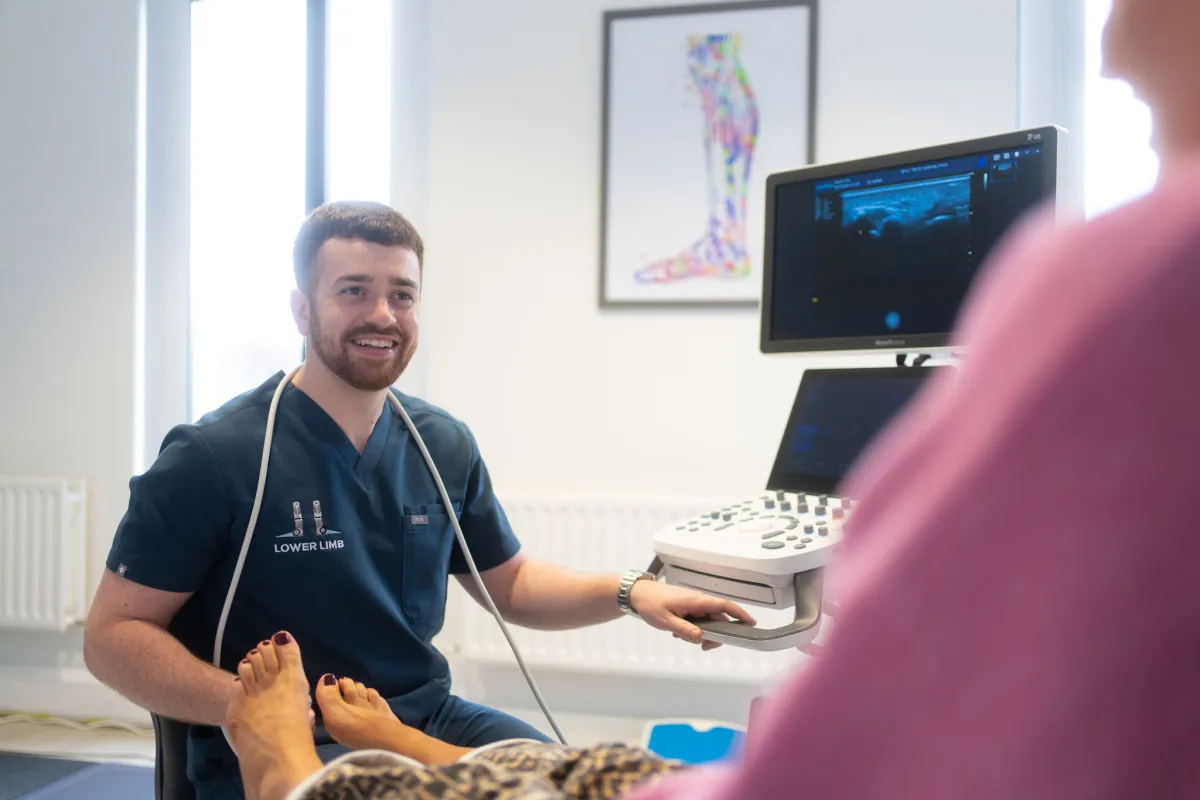
Not as a first-line treatment. We treat the majority of plantar fasciitis without injection. When we do use injection therapy, it is for severe or recalcitrant cases that have not responded to a full course of conservative care, and we always perform the injection under ultrasound guidance to maximise accuracy and minimise risk.
Are custom orthotics worth it?
For runners with biomechanical contributors to their fascia overload, yes. We make ours in-house at our sister lab, Réalta Labs, using a 3D scan of your foot. We do not prescribe orthotics for everyone with plantar fasciitis. We prescribe them when the gait analysis and the physical exam show that load-sharing will make a meaningful difference. They are usually a temporary tool during the recovery phase rather than a permanent solution.
Can I run a marathon with plantar fasciitis?
It depends on severity, time to event, and willingness to manage the post-race recovery. We have helped runners get to the start line of a half marathon or marathon with active plantar fasciitis, but the management is intensive and the post-race recovery is non-trivial. If you have an event inside eight weeks, please come in and let us assess.
What about shockwave therapy?
Shockwave therapy may be considered for selected persistent plantar heel pain that has not responded to initial care. The evidence and likely benefit vary, so we discuss suitability, uncertainties and alternatives after assessment rather than recommending it routinely.
Will my plantar fasciitis come back?
Recurrence is possible but not inevitable. Around one in three runners who have had plantar fasciitis will have a second episode at some point in their running life. Most recurrences are preventable with the strength, footwear, and load-management habits described in the prevention section above.
Do you treat plantar fasciitis at the Dublin clinic too?
Yes. Darren Costello runs our Dublin MSK clinic monthly at Body Med, Clontarf, on the coast road. The pathway is identical to Belfast and includes diagnostic ultrasound, gait analysis, and the option of custom orthotics from Réalta Labs. The Dublin clinic is specialist-only, so booking is for full assessments rather than routine care.
How much does the assessment cost?
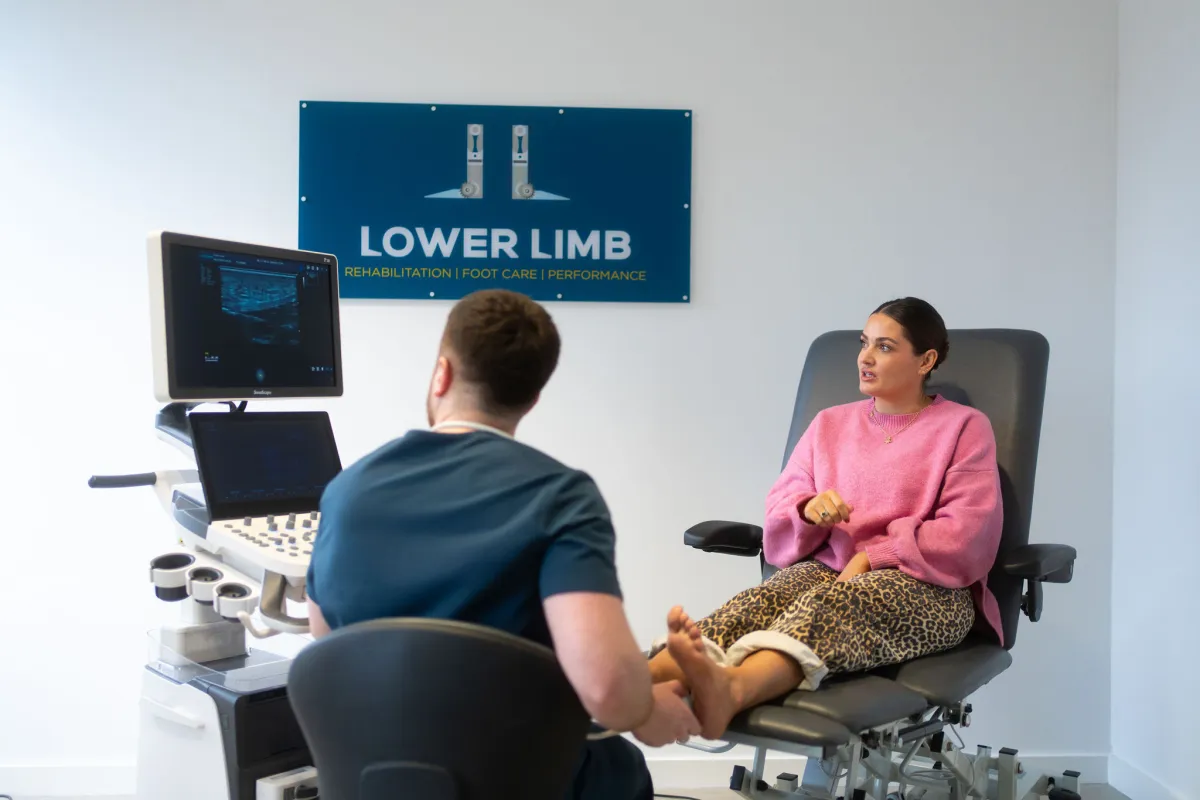
You can find current pricing on our prices page. The full MSK assessment includes diagnostic ultrasound and gait analysis as standard. Most patients are surprised at how much is included in a single appointment compared with what they have experienced elsewhere.
Ready to fix this properly?
If you have been managing plantar fasciitis alone for more than a few weeks, an MSK assessment with us will short-circuit months of guesswork. We will diagnose, image, analyse your running, and build you a plan. Book your MSK assessment online or call 028 9013 9185.