Plantar fasciitis affects roughly 1 in 10 people at some point in their lives. At the Lower Limb Clinic in Belfast, it's the single most common condition we treat. If you're experiencing that stabbing pain under your heel, especially with your first steps in the morning, this guide is for you.
What Is Plantar Fasciitis?
The plantar fascia is a thick band of tissue that runs along the bottom of your foot, connecting your heel bone to your toes. When this tissue becomes overloaded (through repetitive strain, poor footwear, or biomechanical issues) it develops micro-tears and inflammation. The result? Sharp, sometimes debilitating heel pain.
Why Generic Advice Often Fails
If you've Googled "plantar fasciitis treatment," you've probably found advice like "rest, ice, and stretch." While these basics have some value, they rarely resolve the underlying cause. That's why many Belfast patients come to us after months of self-treatment with no improvement.
The problem? Plantar fasciitis has multiple potential causes, and without identifying yours, treatment is guesswork.
What Actually Works: Evidence-Based Treatments
1. Shockwave Therapy (ESWT)
Extracorporeal shockwave therapy may be considered for selected persistent plantar heel pain. Evidence and response vary, so at Lower Limb Clinic we discuss suitability, likely benefits, uncertainties and alternatives after assessment.
2. Custom 3D Orthotics
Off-the-shelf insoles rarely provide enough support. Our custom orthotics are manufactured in-house using 3D scanning technology, ensuring a precise fit that addresses your specific biomechanical issues, whether that's overpronation, high arches, or something else entirely.
3. Ultrasound-Guided Injection Therapy
For severe cases, a corticosteroid injection can provide rapid relief. We always perform these under ultrasound guidance to ensure accuracy and maximise effectiveness while minimising risk.
4. Structured Rehabilitation
A targeted loading programme, including eccentric exercises and calf strengthening, is essential for long-term recovery. We design bespoke programmes based on your assessment findings.
What Doesn't Work
- Rolling a frozen bottle: Provides temporary relief but doesn't address the cause
- Generic insoles from the chemist: Not specific enough for your foot mechanics
- Complete rest: Actually weakens the tissue and delays recovery
- Ignoring it: Plantar fasciitis rarely resolves on its own after 6 months
Our Belfast Clinic Approach
Every patient at the Lower Limb Clinic receives a comprehensive assessment including:
- Detailed history and symptom analysis
- Biomechanical and gait assessment
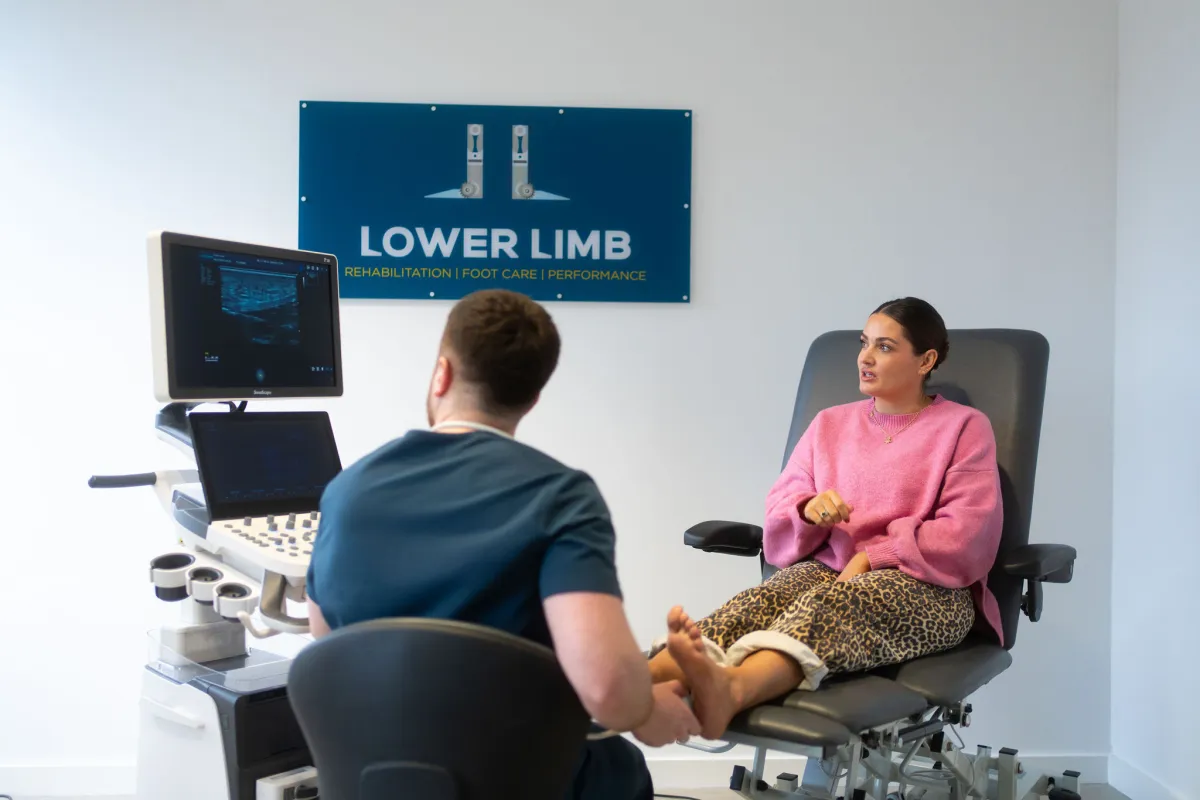
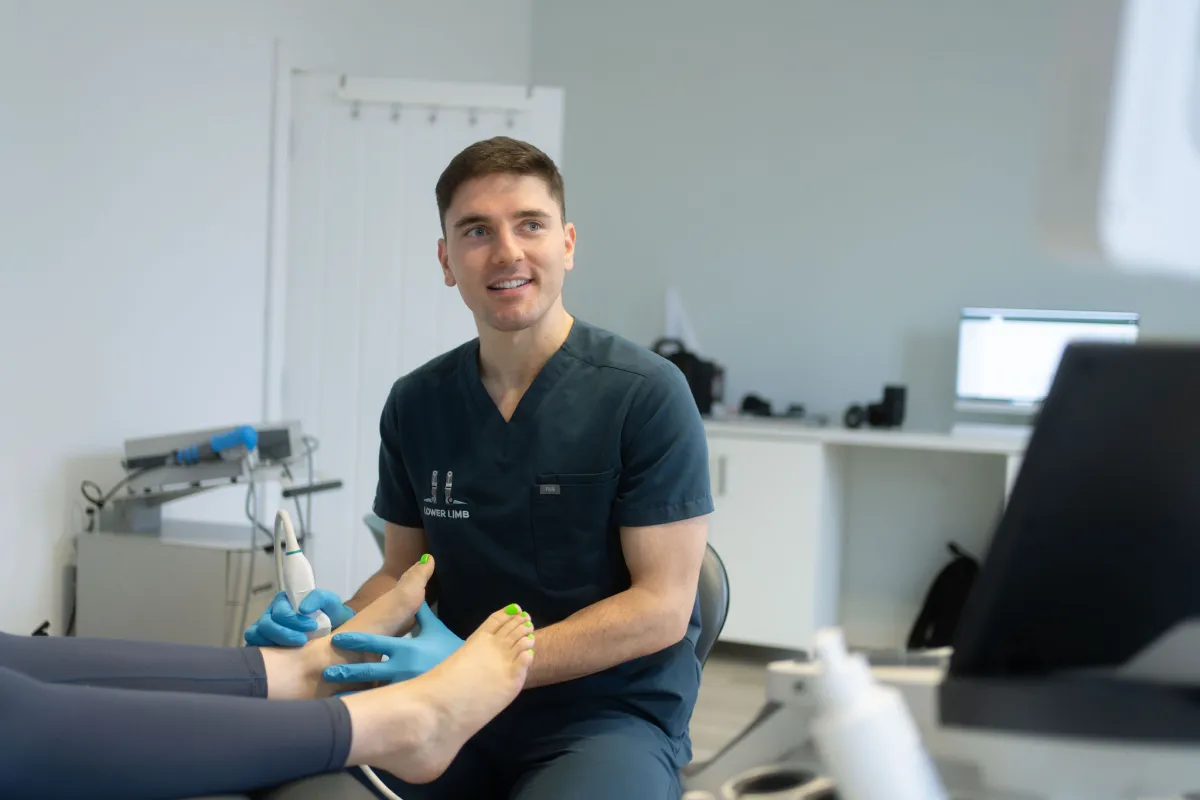
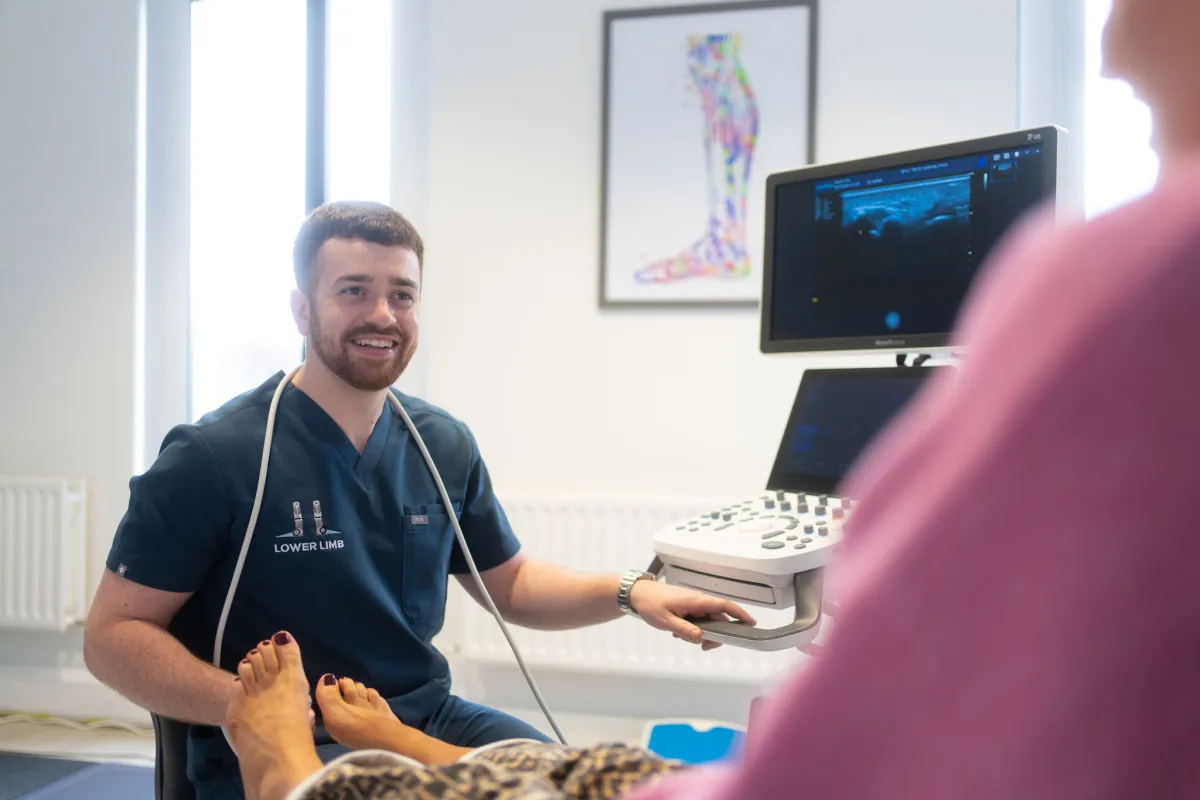
- Diagnostic ultrasound to confirm the diagnosis
- Personalised treatment plan with clear timelines
Heel pain that won't shift?
Our assessment includes diagnostic ultrasound so you get an accurate diagnosis on day one, not a best guess. Book online or call 028 9013 9185.
Don't Suffer in Silence
If you've been living with heel pain for more than a few weeks, it's time to get expert help. Book your plantar fasciitis assessment at our Belfast clinic today.