If you have been referred for NHS physiotherapy or an MSK clinic appointment in Northern Ireland, you already know the problem. The referral goes in, and then you wait. Weeks become months. Your back, shoulder, or knee does not wait with you.
This is not a criticism of NHS staff. Physiotherapists and MSK clinicians across the health trusts work incredibly hard with resources that have not kept pace with demand. But the reality for patients is stark: Northern Ireland consistently has the longest healthcare waiting times anywhere in the UK, and musculoskeletal services are among the most stretched.
Why Waiting Matters With MSK Problems
For many conditions, waiting is not neutral. It actively makes things worse.
- Acute injuries become chronic. An ankle sprain rehabilitated properly in the first six weeks usually recovers fully. The same sprain left unmanaged has up to a 40% chance of developing into chronic ankle instability.
- Pain changes how you move. Limp on a sore knee for four months and you develop compensation patterns in your hip and back. By the time you are seen, there are two problems instead of one.
- Deconditioning sets in. Pain makes you less active. Less activity means weaker muscles, stiffer joints, and lower fitness, all of which make recovery slower once treatment finally starts.
- Simple problems become complicated ones. Early-stage tendinopathy responds well to a loading programme. Late-stage tendinopathy can take months longer to resolve.
The clinical evidence is consistent: for most MSK conditions, earlier assessment and treatment means faster, more complete recovery.
What Are Your Options in Northern Ireland?
Option 1: Wait for NHS Treatment
If your condition is stable, not worsening, and not significantly affecting your work, sleep, or daily life, waiting may be reasonable. Stay as active as your pain allows, and if your symptoms change significantly while you wait, go back to your GP, as your referral priority can be reviewed.
Option 2: Use Your Health Insurance
If you have private health insurance through work or personally, MSK treatment is usually covered, and many people forget they have it. Bupa, AXA, Vitality, and WPA all cover physiotherapy and podiatry-led MSK care. We are recognised providers with major insurers, and many policies do not require a GP referral for MSK appointments. It is worth checking your policy documents or ringing your insurer before assuming you have to pay out of pocket.
Option 3: Self-Fund Private Treatment
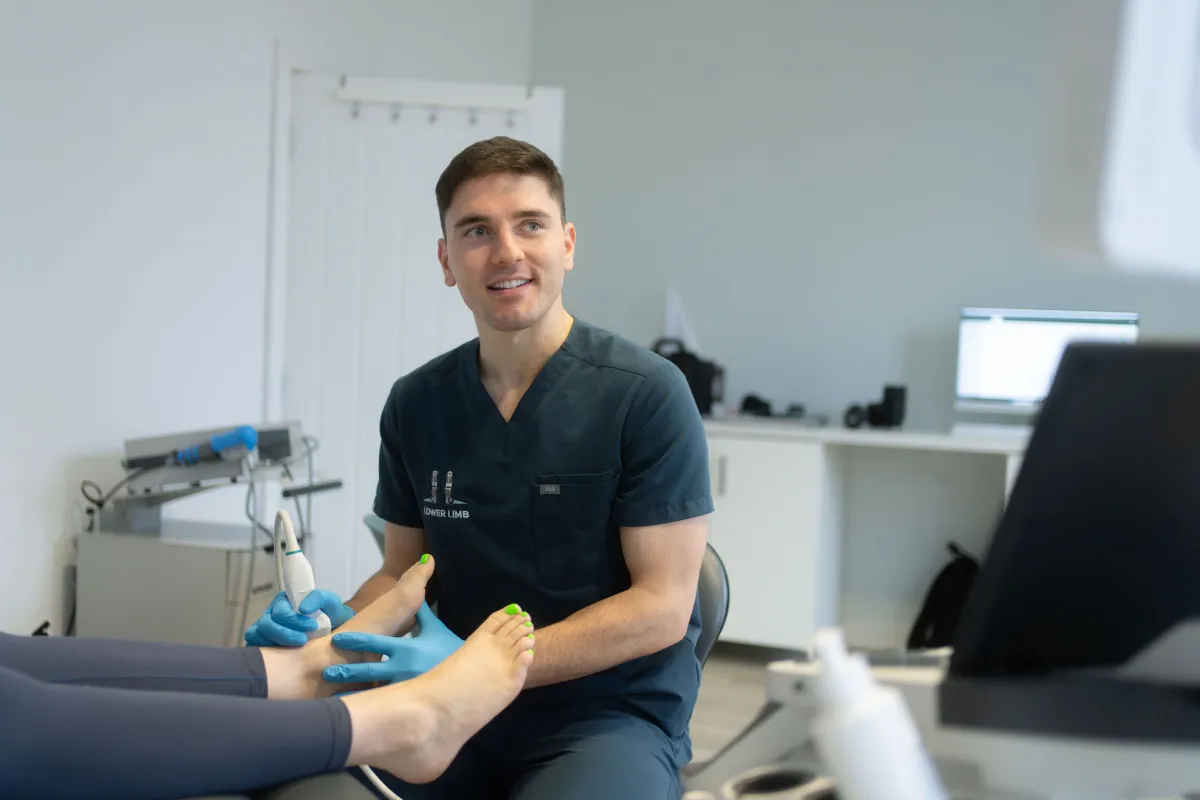
This is more affordable than most people expect. Private MSK care is not a luxury product with hospital-sized bills. At Lower Limb Clinic in Belfast, a focused 30-minute acute injury assessment is £98, and the full 60-minute Podiatry Injury Assessment, with a diagnostic ultrasound scan included at no extra charge, is £140. Follow-up review sessions are £70.
For comparison, the full assessment includes things that would typically require multiple separate NHS appointments: clinical examination, imaging, diagnosis, and a treatment plan, all in one visit.
What Private Treatment Costs in Belfast
| Appointment | Cost | What's Included |
|---|---|---|
| Acute Foot & Ankle Assessment (30 min) | £98 | Examination, diagnostic ultrasound if indicated, diagnosis, treatment plan |
| Podiatry Injury Assessment (60 min) | £140 | Diagnostic ultrasound included, gait analysis, biomechanical testing, orthotic evaluation, treatment starts same visit |
| Injury review (existing patients) | £70 | Hands-on treatment and rehabilitation progression |
| Shockwave therapy | £90 per session | ESWT for selected persistent heel and tendon conditions after assessment |
Most straightforward MSK problems need an assessment plus 3 to 6 follow-up sessions. That puts a complete episode of private care for many conditions in the £310 to £560 range, which is less than many people spend on a phone contract over the same recovery period.
Tired of waiting?
We usually have appointments available within 1-2 weeks, and no GP referral is needed. Book your assessment online or call 028 9013 9185.
What We Can See You For Now
Our MSK assessment service covers the foot, ankle, knee, hip, and lower limb, including plantar fasciitis, Achilles problems, ankle sprains, knee pain, hip pain, and bursitis. Diagnostic ultrasound, shockwave therapy, ultrasound-guided injections, gait analysis, and custom orthotics are all available in-house, so there is no second waiting list for imaging or treatment.
Full-body physiotherapy is now available at Lower Limb Clinic in Belfast, covering back pain, neck pain, and shoulder conditions. If you have one of these problems, book online to see our physiotherapy team.
Questions to Ask Before Going Private
Not all private clinics are equal. Before you book anywhere, ask:
- Is the clinician registered? Physiotherapists and podiatrists must be HCPC registered. You can check any clinician on the HCPC register online.
- Can they actually diagnose, or just treat? Ask whether diagnostic ultrasound or other imaging is available, and whether it costs extra or requires a referral elsewhere.
- What does a full episode of care cost? A cheap initial appointment means little if you need twice as many sessions. Ask about typical treatment lengths for your condition.
- What happens if it is something more serious? A good clinic has clear referral pathways for problems that need a consultant or surgical opinion.
The Bottom Line
Nobody should feel pressured into private healthcare, and for stable, low-impact problems, waiting for NHS care is a perfectly sensible choice. But if pain is affecting your sleep, your work, your sport, or your day-to-day life, and the waiting list stretches months ahead of you, you have options, and they cost less than most people think.
About the Author
Paul McMullan is a specialist MSK podiatrist and founder of Lower Limb Clinic, Belfast, with clinics on Lisburn Road and Ormeau Road. He holds an MSc in Podiatric Sports Medicine from Queen Mary University of London and is a Fellow of the Royal College of Physicians and Surgeons of Glasgow (FRCPSGlasg).
Disclaimer: This article is intended for general informational purposes only and does not constitute medical advice. Waiting times vary by health trust and specialty. If you have concerns about your condition while on a waiting list, contact your GP.