
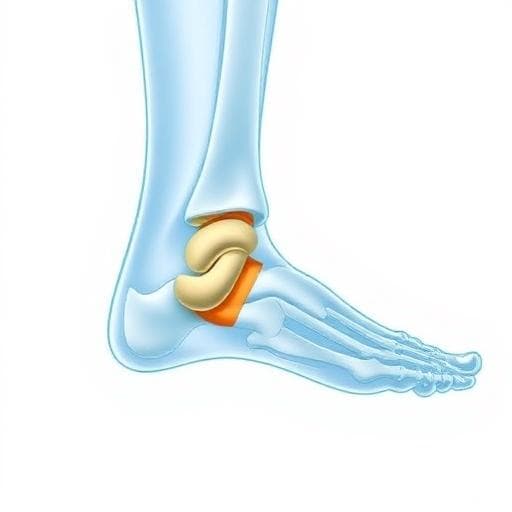





What Are Flat Feet?
Flat feet (pes planus) describes a foot posture where the medial longitudinal arch sits lower than typical during standing or walking. The heel often tilts outward (rearfoot eversion) and the forefoot may splay or abduct. This is an extremely common foot type. Estimates suggest 20–30% of the adult population have some degree of flat foot posture.
The critical point that many clinics miss: flat feet are a foot shape, not a diagnosis. Having flat feet doesn't automatically mean you have a problem. Many elite athletes (including marathon runners, rugby players, and sprinters) perform at the highest level with flat foot posture. The question isn't whether your feet are flat, but whether that foot posture is contributing to symptoms or functional limitations.
There are two fundamentally different types, and the distinction drives every treatment decision:
Flexible flat feet: The arch appears low or absent during weight-bearing but reforms when you stand on tiptoe or when the foot is examined in a non-weight-bearing position. The joints are mobile, the foot functions through its range, and the arch can be restored with muscle activation. This is the most common type and frequently requires no treatment at all if asymptomatic.
Rigid flat feet: The arch is absent regardless of position: in standing, on tiptoe, and when examined off the ground. This indicates structural change in the bones or joints, often from tarsal coalition (a congenital bony or cartilaginous bridge between tarsal bones), previous fracture, advanced posterior tibial tendon dysfunction, or degenerative joint disease. Rigid flat feet more commonly cause symptoms and are more likely to require intervention.
A third important category is adult-acquired flat foot (posterior tibial tendon dysfunction, or PTTD). This develops in adulthood, typically affecting one foot, when the posterior tibial tendon progressively weakens and fails to support the arch. It's staged from I (tendon inflammation with maintained arch) through to IV (rigid deformity with ankle involvement). Early identification and treatment of PTTD is crucial because it's progressive. What starts as tendon pain can become irreversible structural deformity if left untreated.
Symptoms That May Indicate Your Flat Feet Need Attention
- Arch pain or tiredness after prolonged standing or walking
- Pain along the inside of the ankle or behind the medial malleolus (may indicate PTTD)
- Knee, hip, or lower back pain that develops alongside flat foot posture
- Difficulty performing a single-leg heel raise on the affected side
- Shoes wearing excessively on the inner edge
- Recurrent shin splints, stress fractures, or tendinopathy
- Progressive change in foot shape, one foot becoming flatter than the other, especially in adulthood
When Flat Feet Don't Need Treatment
If you have flexible flat feet with no pain, no functional limitation, and no progressive change, treatment is unlikely to offer meaningful benefit.
Children under the age of 6 almost universally have flat-appearing feet because the fat pad under the arch hasn't yet thinned and the arch is still developing. This is normal development, not pathology.
In adults, asymptomatic flat feet that have been stable for years typically need monitoring rather than intervention.
We are honest about this. Not every patient who walks through our door with flat feet needs orthotics, exercises, or treatment. Our job is to give you an accurate assessment and honest advice, even when that advice is "your feet are fine."
How We Assess Flat Feet
Pressure Plate Gait Analysis
This is the centrepiece of our flat foot assessment. In-floor pressure plates capture exactly how forces distribute through your feet during walking, not just a static snapshot, but the dynamic reality of how your foot loads with every step.
- Contact area patterns: How much of the midfoot contacts the ground, quantifying the degree of arch collapse under dynamic load.
- Peak pressure distribution: Where maximum forces concentrate during each phase of gait.
- Centre of pressure trajectory: The path force takes through the foot. In flat feet this often tracks too medially.
- Timing analysis: How long each part of the foot is in contact with the ground, identifying prolonged pronation.
- Left/right asymmetry: Crucial for identifying unilateral adult-acquired flat foot.
This data transforms orthotic prescription from opinion-based to data-driven. Instead of looking at a static footprint and prescribing a generic arch support, we can see exactly which phase of gait needs correction and target orthotic features accordingly.
Diagnostic Ultrasound
For flat feet with pain along the medial ankle, we use ultrasound to assess the posterior tibial tendon directly. A healthy PT tendon appears as a bright, fibrillar structure approximately twice the diameter of the adjacent flexor digitorum longus tendon. In PTTD, the tendon becomes thickened, hypoechoic (darker), and may show partial tearing, peritendinous fluid, or increased vascularity on Power Doppler.
Ultrasound also identifies spring ligament damage (a key stabiliser of the medial arch), tibialis posterior tenosynovitis, and accessory navicular syndrome, all conditions that present alongside or mimic flat foot symptoms.
Clinical Biomechanical Assessment
We assess the Foot Posture Index (FPI-6), a validated 6-item scoring system that quantifies foot posture objectively on a scale from -12 (highly supinated) to +12 (highly pronated).
- Ankle dorsiflexion range: Tight calves often drive compensatory pronation.
- Single-leg heel raise capacity: The gold standard functional test for posterior tibial tendon. Inability to perform 5+ single-leg raises is a red flag for PTTD.
- Jack's test / Hubscher manoeuvre: Testing whether the arch restores with great toe dorsiflexion, indicating windlass mechanism function.
- Hip strength and gluteal function: Weak hip external rotators can drive excessive internal rotation and secondary foot pronation.
- Rearfoot-to-forefoot relationship: Identifying structural forefoot varus or valgus.
Treatment Options
Custom Foot Orthoses
Posterior Tibial Tendon Rehabilitation
Calf Stretching & Ankle Mobility
Hip & Proximal Strengthening
Shockwave Therapy
Richie Brace & Custom AFO
Surgical Referral
Flat Feet in Children
Parents frequently bring children for assessment of flat feet, often concerned by advice from relatives, school nurses, or shoe shop staff. It's important to understand that flat feet in children under 6 are almost universally normal. The medial arch develops progressively between ages 3 and 10, and early intervention with orthotics in this age group has not been shown to influence long-term arch development.
We recommend assessment for children when there is:
- Pain. This is never normal and always warrants investigation
- A significant difference between left and right foot posture
- Difficulty keeping up with peers in physical activities
- Unusual shoe wear patterns
- Progressive worsening of foot posture after the age of 8
- Family history of tarsal coalition
Our paediatric assessment is thorough but gentle, and we are upfront with parents about what does and doesn't require treatment. We'd rather reassure a worried parent than prescribe unnecessary orthotics for a developing foot.
What to Expect at Your First Appointment
Detailed history
5 minClinical examination
10 minPressure plate gait analysis
5 minDiagnostic ultrasound
5–10 minFindings & treatment plan
5 minRecovery and Prognosis
Outcomes depend on the specific diagnosis:
Symptomatic flexible flat feet managed with orthotics and exercise. Most patients report significant improvement within 4–8 weeks. Orthotics manage the mechanical problem; ongoing use during aggravating activities is typically recommended.
PTTD stage I (tendinitis): full recovery expected with 8–12 weeks of structured rehabilitation combined with orthotic support.
PTTD stage II (tendon degeneration with flexible deformity): management is typically long-term. Orthotics and strengthening can stabilise the condition and significantly reduce symptoms, but the tendon may not return to full normal function.
PTTD stages III–IV: conservative management aims to reduce pain and improve function, but structural correction usually requires surgery.
We monitor progress with repeat pressure plate analysis and ultrasound scanning, tracking objective changes in gait patterns, tendon structure, and functional capacity alongside your symptom reports.
Your Clinicians
Paul McMullan BSc(Hons) MSc FRCPSGlasg MRCPod: Lead clinician with nearly 15 years of specialist experience in biomechanical assessment and orthotic prescription. Holds an MSc in Podiatric Sports Medicine from Queen Mary University of London. Fellow of the Royal College of Physicians and Surgeons of Glasgow. Extensive experience with complex flat foot presentations including adult-acquired flat foot and post-surgical management.
Darren Costello BSc(Hons) MSc PGCert MRCPSGlasg: MSc Sports and Exercise Medicine, Member of the Royal College of Physicians and Surgeons of Glasgow, postgraduate certificate from Brunel University in lower limb musculoskeletal assessment. Specialist interest in gait analysis and progressive rehabilitation for tendon pathology.
Why Patients Choose Lower Limb Clinic
Pressure plate gait analysis in every flat foot assessment
Diagnostic ultrasound available in-clinic
Custom orthoses designed from your gait data
Honest assessment
Full kinetic chain approach
MSc-qualified clinicians
Frequently Asked Questions
Common questions about Flat Feet at Lower Limb Clinic.

Clinically reviewed by Paul McMullan, BSc(Hons) MSc FRCPSGlasg MRCPod
BSc (Hons) Podiatry · MSc Podiatric Sports Medicine (QMUL) · FRCPSGlasg · MRCPod
Lead Podiatrist & Clinical Director, Lower Limb Clinic Belfast